Sunday, March 3, 2013

Forced - Accursed Share


Brooklyn's Forced lay between the realms of many genres. An obvious hardcore influence is apparent in the confident rhythms employed by all five tracks on Accursed Share, their debut release, but layered chord choices, atonality and sections of experimental guitar noodling hint at a far deeper bookshelf employed by the trio of Dave Freidrich, Mike Hegarty and Scott Brown. The fluid melodies of opening track Accursed Share, as well as the two latter tracks on the release, Devours Everything and Partitioning the Sensible are a nod to blackened touches as well as moments of tremolo blasts scattered throughout the album. Moments of technical dives and climbs may invoke briefly technical doomsters Confessed.


The overall picture here though is much closer to a band like Neurosis or Black Anvil though where Black Anvil is a bit more black, Forced are a bit more hard core and the atonal pendulaic strumming encountered throughout ties the whole thing together with a yarn of post-hardcore less the whiny choruses and trendy haircuts. This is way rougher than any of that stuff and a track like At Empire's End - my favorite on display here - provide an example of polished and crystal clear production done without sacrificing the grit and nastiness that's so necessary for the at times sludgy material to sink in and be effective. Guitars are sharp, decisive and ring with the overworked amplifier buzz of elder fuzz pedals. When Empire's End encounters the most atmospheric moment of the album - a forty second jog through hazy and eerie chords - the gnarly overdriven bass is audible. The drums are punchy and clear as well.

The whole thing is a nice tight recording and engineering job and it serves the music perfectly. I guess the most lackluster component of the band's sound are the vocals which are highly generic raspy screams encountered practically everywhere. They're well performed but have little character which makes this twenty five minute release feel a bit longer than it actually is. Composition is nothing particularly spectacular here. The songs follow a straight-forward approach. Individual songs are separated more by their tempo and pace than by their melodies. A lot off the riffs feel as if they could interchanged between each song. The variety in riff construction, as tight and emotionally performed as the riffs are, isn't that great.

Overall, for a first EP Forced are off to a good start. Perhaps some focus on song individuality and variety and working to separate the band from others in the same style would make the listening more enjoyable. The overall impression I get is that Forced would gain a lot by figuring out how to combine their rhythmic sensibilities with the layered melodic material and by doing so would set them apart from the more stereotypical path they are on right now.

Steel Raiser - Gianluca Rossi Interview


Italy's Steel Raiser have just released "Regeneration," the follow up to their 2007 debut, Race of Steel. The album is an in your face, heavy hitting combination of European Power Metal, Traditional Metal and hints of US Power Metal grit and aggression. After seeking out Gianluca Rossi after the awesome discovery of Valkija's "Avengers of Steel" a few years ago and eagerly awaiting his next output, my patience has reaped rewards. "Regeneration" is available from Pure Steel Records and I recommend picking up the new Attacker album as well while you're there. But this is about Steel Raiser, their awesome new album and I have Gianluca to thank for the interview.

Contaminated Tones: Gianluca, tell me about the beginnings of Steel Raiser. How was the band formed? 

Gianluca Rossi: It all began in 2007 when Alfonso and I decided to start this adventure together. Both had come from important experiences, with Valkija I published the first and only album in 2004, while Alfono out with the Noble Savage two years later. We need something new, different, perhaps more challenging and sprang the Steel Raiser.

CT: Officially the band is called Steel Raiser III. Why the roman numeral suffix? Why not just call the band Steel Raiser? Where did the name originate from?

GR: Indeed the official name of the band is STEEL RAISER. Alfonso had initially added to the name the Roman numeral suffix but almost immediately the boss of Pure Steel advised us to remove it. Already at the time of "Race Of Steel", STEEL RAISER, was our monicher.

CT: How did Steel Raiser come to the lineup which you are at now? I see that the band no longer has a full time keyboardist, opting for a more traditional arrangement of twin guitars, bass, drums and vocalist. Gianfranco Strano still appears to lend keyboards on the album in spots.

GR: The current lineup is starting to take shape in 2009, on our return from Swordbrother Festival in Germany. Initially the band was composed of Alfonso and me, but after the good results of "Race Of Steel" culminated with the participation to the German festival, we decided to complete the lineup. Gianfranco can be considered the sixth element in the studio, orchestral parts and keyboard are his work, as well as the first album.

CT: You released a demo in 2007. What kind of response did you get from this demo? You were able to put out a full length album shortly after the release of the demo. When you recorded the demo, did you already have songs planned for Race of Steel, your debut album?

GR: Yes, in 2007 we recorded the demo. The response was really good, also after a few days of the publication of the songs on our myspace we were contacted by Pure Steel Records. We immediately proposed a contract and the publication of the first album. At the time of signing we did not have all the pieces to complete the album, so we went into the studio and recorded the rest. Everything came out very quickly even natural. Maybe that's why "Race Of Steel" is an album direct and fiery, like a punch in the face!!

CT: Regeneration is your second album since the formation of the band. How would you compare this album to your previous release, Race of Steel? 

GR: As I said above "Race Of Steel" came quickly and left rough, fierce and fiery. "Regeneration", retains the features of the previous release but is more mature. The themes are deeper, sounds more powerful. We had more time to work and take care of every detail.
 

CT: Regeneration is an excellent album, inspired by both Traditional Metal and the European vein of Power Metal. Tell me about the writing process for this album. It took you five years to finally complete. The majority of songs are written by Alfonso and yourself.

GR: Thank you for your compliment. It's been five years since the release of "Race Of Steel", but not all were used for the conception of the same. "Regeneration" began to emerge around 2011 when I started to record the first riffs and write some text. The compositional process is quite simple, I write the music and Alfonso melodies and lyrics. Then we meet in the studio and complete the whole. Like you said we are inspired by Europen power metal but also the U.S. Metal.

CT: Is there any specific meaning behind Regeneration's title?

GR: Behind the album title, you can read a lot. In this dark period, where all human relationships are more complicated, the man needs to get away from certain conventions, free from the chains of hatred and just regenerate. This is a bit 'the meaning of the title of the album.

CT: Lyrically, what are the themes present on the album? Are there any particular tracks which you would like to expand on the lyrics?

GR: The texts, although we can not speak of a concept album, have a theme, such as the difficulties of living in harmony and full relations with the people we love most. Songs like "Love Is Unfair" and "Wings of the Abyss" speak precisely of this. Happiness is at hand but can be felt, you miss for trivial reasons. The album also contains songs more focused on the fantastic, like "CyberLazer" and "The Executioner", the work of Alfonso, big fan of the genre.

CT: Currently, my favorite track is Magic Circle. Tell me about that track. It's the only song with some lyrics in Italian.

GR: Yes, the brainchild of Alfonso. The Italian is not a very easy language to music, but we found it very interesting and different place these short lines in Italian. Give that little bit extra to the piece that does not mind at all. An experiment that who knows, we might repeat in the future.

CT: What two tracks on this album would you say really best represent what Steel Raiser is and what aspects of those tracks are standout to you?

GR: Surely tracks faster and more powerful as "The Executioner", "Cyberlazer" and "Magic Circle" are those who represent us more, because they bind much with the work on the first album. But the years have made us a little 'more mature and I can say that in spite of all the albums in general it is the best.

CT: Both albums have been released by Pure Steel Records. How did you arrive at a deal with Pure Steel Records and what is your impression of the label so far into your tenure with them?

GR: As said above we got to deal with Pure Steel unexpectedly and fast, a few days after the publication of some pieces that were composed of "Race Of Steel". We are very satisfied with the relationship started with them, it is a label that is growing very quickly, which supports up to their own groups spite of the many difficulties that now pours the music market. We can only be happy to work with them.

CT: The band members, I'm sure, all have different individual influences but when you pool everyone together, what bands and artists have been universally inspirational to those behind Steel Raiser?

GR: The influences of each band member are not very different, although everyone likes listening to music maybe different tastes of others, we still share a passion for classic metal. We love the fathers of metal, bands like Judas Priest, Iron Maiden and Saxon and classic sounds are easily tuned by the will to carry on our group.

CT: The Italian scene has been one of the standout areas for Heavy, Speed and Power Metal the past few years. What other bands from this ecclectic country could you recommend listeners to check out? Baphomet's Blood is one of my favorites.

GR: The Italian metal is in good shape, despite the great difficulties facing our country. Of all I would quote Alltheniko and Trinakrius, two great bands.

CT: Is Steel Raiser planning on any performances in the upcoming future? Any festival appearances planned to promote the new album? 

GR: Yes, we are evaluating the possibility of playing outside Italy and to better promote our work. Unfortunately it is not easy to organize everything, but we are using all the energy we have. I think that very soon there will be some good news about it.

CT: What is your opinion on the music industry at large compared to the underground Heavy Metal circuits? I believe that generally underground labels tend to have more invested in their product and care more about their artists than major labels. Your thoughts?

GR: I think the market is the same for labels large and small, I have not noticed a huge support from the small labels, in my experience, to the community. It offers the possibility to distribute the disk, print it, but it is we who produce it with great sacrifices. This is not to say that the independent labels do not have much trouble surviving in these times of economic crisis and do what they can to promote us.

CT: Do you think that with all the new digital file sharing possibilities and ease-of-access to free music via the internet, that there will come a time when there will be no such thing as physical releases for bands?


GR: I hope not. On the one hand the digital market facilitates the distribution and promotion of the work of a band, but do not turn off the physical release. I consider the CD or vinyl a link between the band and their fans unlike the digital release that is cold.

CT: Gianluca, thanks for taking the time to respond to my interview questions! Regeneration is an awesome album and I recommend it to anyone into Heavy Metal and Power Metal. The last words are yours.

GR: Of course, thanks for your support and the opportunity granted. We are satisfied with the work done and the feedback has been very good. This makes us want to keep going with more force our way, to promote our music, have fun and entertain our fans. Thank you again my friend.

Saturday, February 23, 2013

Vaporizer - Vaporizer (EP)


Vaporizer play stoner doom fused with melodic death metal, but mostly leaning towards heavy and overdriven rock and roll like The Sword. It sounds like early High on Fire with a lighter guitar tone and a vocalist who they grabbed from a random grindcore band. It's some solid, groovy stoner metal except for the vocalist, who sounds like he'd fit in a brutal death metal band but pretty much ruins this music with his growls and shrieks. He completely ruins the music live, by overpowering the solid riffs with his incomprehensible grindcore shrieks. Please, get a new vocalist.

The music here is generally stoner doom with a rock and roll vibe with some more extreme parts mixed in. There's a fair amount of double bass and melodies backed by heavy chugging. The vocalist ruins the feel of the music, sounding like Seth Putnam on an Anal Cunt record, but with less groove and not pulling off any sort of vocal groove. I don't know why that guy is in the band, they would improve greatly by simply getting rid of him, and even more by replacing him, ideally with a fat man from Louisiana.

The bottom line with Vaporizer, on this EP and live, is that they're a solid band with some good melodeath riffing and a good stoner doom feel, which would be a lot better if they fired their singer into the sun. They would be better off by having the fattest guy who showed up to each show singing, but instead they have a crappy vocalist who doesn't fit the music screaming like it's another genre and managing to be more unpleasant than Anal Cunt. Seriously guys, please fire your singer into the sun and find someone who sounds nothing like him. The vocalist is awful, the rest is pretty good.

In Flames - Sounds of a Playground Fading

Prelude

Nobody has a reputation and following quite like In Flames. Jesper Stromblad formed the band with a vision of blending death metal with Iron Maiden-style harmonies, brought it to life by borrowing members from other bands, created a unique sound by writing with the band as a third guitarist while playing drums live. Their first album was as disorganized as the band's lineup at the time, but it was an interesting and revered combination of harmony-filled death metal, with folk songs and passages and the odd inclusion of a violin at times, several steps closer to mastering the inclusion of that instrument than At The Gates, who reportedly only included violinist Jesper Jarold on their debut when a public image campaign in Sweden required all metal bands to have a member named Jesper.

From there, band underwent a transformation from side project to full-time band, creating an EP that even naysayers of their style often admit to enjoying - these sessions utilized two drummers and five vocalists who weren't on the debut and would be out of the picture by the next album. Tired of the revolving door, the band established a stable lineup in 1995.

From there, the band pinned down their classic style, a heavily layered, extremely melodic version of heavy/power metal with low tuned guitars and a growling vocalist. For their next album, they stripped down the sound to be more aggressive and rely on fewer layers, with more string skipping like their peers At The Gates. Following some lineup shifts, they took a turn back towards their 80s roots with some keyboards and a hammond organ on their next release, starting to give the vocalist a bit of room to expand from a monotone. From there, they successfully reinvented their style one last time, aided by a legendary production job with one of the thickest guitar sounds on a palatable metal album, and ushered in a new Swedish sound, something that would come to be hated as it was never as good as the first time, only a bastardization of those serene songs that those bastards from Gothenburg once played.

While the band had not completely reinvented itself from one album to the next, they took so many of the right steps to stay close to home but offer a different outlook each time. This reputation followed them for years to come, knowing that a band who had so much great material to fall back on could always revisit portions of it and come away with something good. As Nuclear Blast signed In Flames clones from Germany and bands flocked to Studio Fredman for "the sound", In Flames opted for a change of wardrobe, building makeshift studios in a rented house overseas, and most fans these days refer to a spiritual change known as "being dead inside".

The band phased out their old material citing the need for songs that were written for two guitarists, and they stripped down their once elegant arrangements to the point where the chugging and grooves were unaccompanied by melodies most of the time, only the increasingly wretched shrieks of their vocalist, who was born again at the turn of the millennium and believed that he could sing. The band did not abandon their old sound, rather they used its elements sparingly and spoke of them as a touch of the old stuff.

The band's legacy followed them in an odd way. With each coming album, their older fans appeared increasingly delusional about the band having some sort of return to form. They donned all-white outfits along with fellow Swedes Soilwork as they both released breakout albums in 2002. When they began rotating normal clothing back into their wardrobes on the second round of touring in support of this album, fans thought they were going to take a turn in direction. The frontman got his nu-metal out through a side project, Passender. Like the title of a song on their previous record, the band started a free fall and their next album was even more atrocious.

Then the band announced their intent to self-produce their next album. Surely they had tired of the synths dominating their sound, and with two guitarists producing, they would put out something like a catchier version of Clayman. Nope. It wasn't as bad as the last one, so that must be an upswing, right? The keyboards were used a bit more sparingly (much like fats, oils, and sweets are used sparingly in the American diet) so that meant they wanted to write more guitar-oriented music again, right? The guitarists even mentioned that they wanted to focus on the guitars more, more like the old stuff. For some reason, the band continued to suggest, here and there, that they had "the old stuff" in mind, which meant something very different to them and to the fans of the old stuff, some of whom still had hope in the band.

Their next album was more guitar-oriented, the music backed off the keyboards, and it was a lot better than the few before it. It was still nothing like the In Flames of days past, but they were headed in a better direction. Following this album, the last remaining founder of the band, Jesper Stromblad, announced his departure. Cue wild speculation. Perhaps losing him was the kick in the ass the band needed to get out of this awful groove, in more ways than one. The band wouldn't add another guitarist for the next album, though we all knew that perennial fill-in Niklas Engelin would get the job. Not welcoming him into the fold immediately suggested that they wanted something other than the nu-metal stylings of his other band, Engel.

...and then they announced the title of the album, and the whole world thought of the cover of Korn's self-titled debut.

-

A child runs through the playground pulling an unusual balloon by a ribbon. The ribbon, wrapped tightly around the child's hand, is also wrapped tightly around the lips of a frog, inflated with helium until it is round and buoyant in the air. The child climbs a ladder, still clutching the ribbon. Upon reaching the highest point on the playground, the child falls to the ground and pulls the ribbon so hard that it comes off of the frog. The helium-filled frog begins croaking, droning as it flies around like a deflating balloon. No, this is just an illusion, a wish that a once mighty band did not fall from the top and roll around in the dirt while their vocalist crooned like helium-filled frog. A dream that the band's once amazing logo had not been replaced by one with text written inside monkey bars, replaced by a stock font, replaced by some scratch that looks like a child's handwriting. Oh, the writing was on the wall, the writing was on the album cover before this one, we should have known.

-

Three major problems arise amidst a myriad of problems that constitute the problem that is this album. The band tried to make a vocal-driven album and they don't have the personnel to manage it. There are too many keyboards for a band without a keyboard player, and they write songs that use them as a crutch or a veil. I know the band are huge fans of Rush, but I no longer have the faith that In Flames can return to form from their crappy keyboard albums. Finally, the bread and butter of In Flames, the guitar riffs, have ceased to be, replaced by a descendant, the derivative of a derivative of the real In Flames.
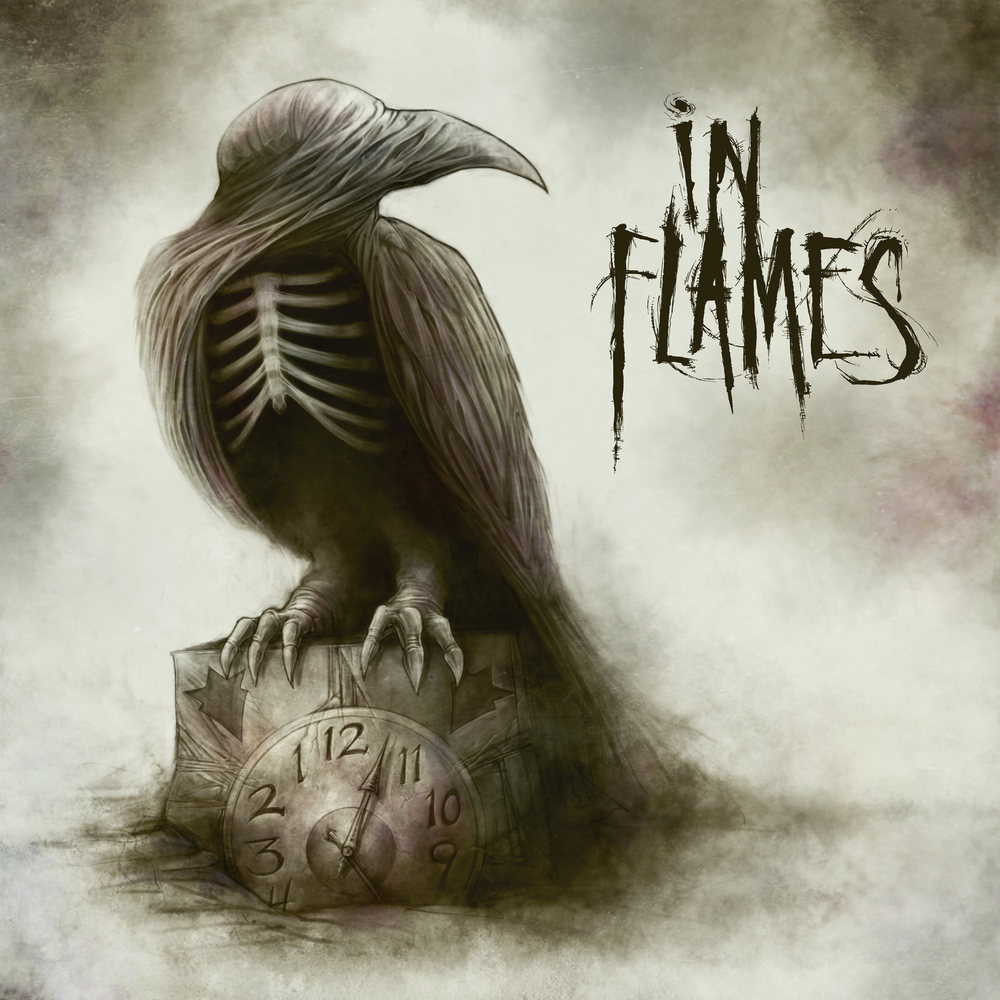
In Flames stated that they intended to make a vocal-driven album. In theory, that could work if their vocalist could sing, but Anders Friden's croaky crooning can only work as a percussive counterpart to melodic guitars. Long gone are the emotive monotone growls with three guitar parts layered over them. The third guitar is long gone too, and the guitars often lay back with power chords to leave room for vocals and keyboards. Their past success stories were largely in part due to great guitar work giving the vocals a narrow range to work within. The sliding half-growls worked for a while, finding a compromise between a monotone and attempting to carry a melody. It just doesn't work here.

If there was a time for In Flames to make an album with lots of clean singing, it was around 1994, when they had a vocalist who could actually sing.

The keyboards are another problem. Örjan Örnkloo has been playing keyboards on every In Flames album for the past decade, with the keyboards becoming increasingly involved in the music, minus a slight dip on the previous album. Although the keyboards are a huge part of the modern In Flames sound, they don't have a keyboard player in the band, and they seem to write songs without a keyboard player being involved. The result of this are synths filling the space, trying to compensate for the inability of the vocals and replace the melodic driving force that the guitars stopped providing a while ago. The synths never take the lead, they don't have their own place in the music like their counterparts Dark Tranquillity integrated quite well a bit earlier than In Flames. Synths fill out the wall of sound as an afterthought to compensate for what the rest of the music can't do.

There was a time when In Flames used keyboards well, fitting them into the music of Colony, giving them some of their own sections as well as some backing time, while still keeping the focus of the album on melodic guitar riffs.

What happened to the guitars? In Flames appear to be in a constant battle to reduce the role of guitars in their music. In the early days they had three guitarists, down to two while using three guitar tracks per song, sometimes with additional harmonies. Over the years they stripped the guitar parts down to rarely include a third, then began to use both guitars in unison while adding keyboards over the top. The departure of Jesper Stromblad did not help at all, with the guitars only pulling out of power chord mode to play harmonies as the tail of riffs, or as a fill. I understand that the point of this record was to leave things wide open for the vocalist to take the lead. That was a poor choice.

Rather than the complex layers of melodies and harmonies that most people knew as the In Flames sound, the occasional leads here are thin, basic harmonies that sound more like throwaway riffs of the In Flames wannabes of a decade ago - those that earned unkind-sounding labels like "Gothencore". The melodies and harmonies are no longer an integral part of the riffs, and the riffs are no longer the style that everyone with two ears loves the band for. The guitar playing is a bunch of mid-paced chugging interspersed with unimaginative harmonized leads.

In Flames used to write great guitar riffs and let them carry the music. Apparently they are content to leave that behind even if it means that they put out a laughably bad album.

This same band once had vivid lyrics of their fantasy world, cryptic hymns of astronomy and mythology. Anders Friden crafted those concepts and the lyrics were penned by Niklas Sundin. Once Anders had a stronger grip on the English language, he moved on to writing introspective, personal lyrics. While I prefer the earlier lyrics, the latter of those were acceptable and helped shape the concept of the Clayman album. Some of the lyrics on this album aren't as bad as others, but it doesn't get much worse than the childish prose of "The Attic":

"There's someone in the attic / Building a strange machine / Never really seen him / But I think he works all day
Blinded by the world outside / I stay inside / Hardly know my name / But it's getting better by time
I saw something in the mirror / Someone's watching me / If I hide in the attic / They will never get to me
Found some rope on the floor / I have to build a trap / So I start on my machine / I am never to be seen"

This album also continues a practice that the band begun when they named an album "Reroute To Remain" - they started by leaving a not-so-subtle hint that their shift in style would be be reverted while penning songs such as "Dismiss the Cynics" - and on this album Anders penned his least eloquent lyrics since "lost my visual 'cause all you fucks are in my way":

"I say goodbye to you all at once / (I) don't dare to face you all alone.
I went from wreckage to world class / With a box of t-shirts and some records to sell,
But times have changed - I have to defend my actions. / The foundation crumbles and I have to leave.
Thanks for everything - I couldn't ask for more... / I say I love you all... as I vanish through the Jester's Door"

If these lyrics hadn't been so honest and straight forward, spoken over some awful new age techno, I would think this was the wreckage. Thanks for defending your actions, I am honestly glad that you made a good living for yourselves after you put out some great albums, and I have some lyrics to suggest for the next In Flames album:

"First five were world class / Next five sucked ass
Couldn't make it on hard work / So we dressed up with Soilwork
Stopped writing metaphors / Instead wrote a song called Metaphor
Our last founder tired of songcraft / So he quit the band to play World of Warcraft."


All That Remains - A War You Cannot Win


All That Remains used to be a meat and potatoes metalcore band that even made the archetype of the catchy-and-heavy metalcore song, "This Calling". Good stuff, but when meat and potatoes are overcooked, the potatoes get mushy and the meat gets tough - it's hard to say that their last few albums have been anything but overcooked, and songs like "What if I was Nothing" and "Not Fading" are nothing but mushy, kind of like cold french fries that never really had the hard crust that gave them texture. Two albums prior to this, on Overcome, the rhythm playing was chunky, but it was starting to give the feeling that it was more a result of the meat grinder being broken than being an inherent upside of the style.

There's still a fair amount of metalcore riffing, double bass, and growled vocals, but it's not very good. They replicate the feeling of listening to a Van Halen song while waiting for the guitar solo, or listening to deathcore and waiting for the breakdown - it's just kind of there to frame the highlight if you're not infatuated with it. The highlights here are choruses led by vocal melodies that are lamer than a Poison ballad amidst thrash metal. All of these lead vocal parts are what you've heard about whenever you've heard anyone make fun of this band. It's just embarassing when there's a contrast of super-chunky chugging and intense shouting in "A Call to All Non-Believers" alternating with the wussiest chorus I've ever heard - it sounds like Phil Labonte isn't even trying here.

Despite the music being bad, Oli Herbert is the highlight of this record with his lead guitar work, not just comparatively good, but genuinely interesting and enjoyable.

All That Remains made a record around radio-friendly choruses with uninteresting and forgettable hooks. They also made a video for "Stand Up" that looks like the dreams of a teenager who plays Call of Duty all day - watch that and you'll earn the right to make fun of them in four minutes.


Tuesday, February 19, 2013

Sacristy - Masters Of Baphometic Devastation


Last year at Signature Riff's Festival of the Unknown, Sacristy happened to be one of the anonymous bands on display. I grabbed a copy of their 2007 album, Masters of Baphometic Devastation while there. The band was enjoyable live. I was curious to see how they managed on a permanent form of media. Perhaps expectedly, the album's highlights are the moments when Sacristy happens to veer away from the generic blast n' thrash so many of this area's black metal bands fall in allegiance with. Generic riffs adorn every track here and while the performances of Natazrahn, Niddhogg and Eschaton are promising, the complete picture is effectively drawn with hazy pastels, providing little detail of note. The songs could be interchangeable with a number of other black metal projects and while Masters... isn't anything worth carrying to the gallows, it's also not going to spread like fire in a field. As if on cue, I'll mention the artwork used is that of Gustav Doré; you know what you're getting into.

Sacristy happens to open their album in the same way as so many other black metal releases, with a grandiose orchestration. Whatever. The opening moments of the first track though are really the highlights of the entire album. "I.N.R.I - Redesecrator" starts with a really memorable and wicked guitar melody before falling victim to a mediocre bridge riff. At times across the album, I am reminded of Aeternus' usage of melody though nowhere close to the cleverness or epicness of the Norwegians. Natazrahn's vocals are also very well executed on the album and he exposes the lyrics of the band - lyrics focusing on a hatred of all religion (did I forget to mention Sacristy isn't the most original band) - in a menacing fashion. The rest of the track switches between slower marching beats and fast blasting sections, a nice dichotomy however with little grasp of flow. Keys add a tertiary texture to the recording but do little else. The song really starts to go nowhere around the  four or five minute mark but it goes on for a full ten minutes.

The rest of the album is pretty much the same with the obligatory seventh track intermission, this one a piano piece courtesy of Natazrahn. It sets up the eighth track nicely. While the heart of the album was particularly captivating from a hypnosis-out-of-ambivalence standpoint, the piano break worked to separate "Symbol Of The Ancients" from the rest of the album. It's a much more focused track than the rest I feel and utilizes the band's strengths excellently. It's patient, instead of being all over the place compositionally. The atmospherics break through here as well, aided by the keyboards and the mixing of the track. Vocals seem to be set back slightly, and with a short ambient break to vary the song's textures, it's not boring in the slightest. Still a stereotypical black metal track, but better done. Melody is highlighted here also with a haunting up heartfelt progression. The last minute of the song the band devolves into an unnecessary faster section which doesn't fit with the rest of the track's aesthetic.

The rhythm section of Niddhogg on bass and Eschaton on drums is a strong point on this album but do little to separate themselves. There are a lot of places where Niddhogg could break away from the song and create some melodic depth but I don't hear that much on the album, he follows closely with the guitar track. Eschaton is strong across the entire album, some flaws are noticeable such as in the beginning of the last track, "Triumph of the Forlorn," where he falls out of time for a moment, but he mostly provides capable percussion backing to the tracks. The beats are all pretty standard and heard before elsewhere but it's become so hard for drummers to do much outside the box in the genre now. Overall, a couple of decent tracks coupled with nice packaging do little to make me believe that black metal fanatics out there wouldn't want this in their collection. It wouldn't really change the genetic make-up of someone's listening though.


Upcoming Shows: Diamond Head, Midnite Hellion, Oz, Maximum Oversatan, Attacker, October 31

Diamond Head, Midnite Hellion and Sacrificial Blood (Not on flyer). 
 
Oz, October 31, Attacker, Midnite Hellion, Antistasis and Maximum Oversatan

Oz, October 31, Attacker, Midnite Hellion, Antistasis and Maximum Oversatan... again

Nortt - Ligfaerd


Circa 2006

Nortt's Ligfaerd is a hollow black hole of despair. Like crawling in a cave in the dark, you see nothing in front of you and then you stumble into a wall or hit your head on a low hanging rock. Much like this cave, Nortt's second full length is deeply seeped with darkness and, for music, it even seems to have a certain moisture to it. Imagine being alone in these dark cavernous depths and hearing the hellish sound of hell's industries of torment and torture.

The production on this album is stagnant. Chords are quickly muffled by the thickness of the production however this works to the advantage of the recording. It offers an atmosphere and allows those feelings to surround you. The pitch blackness of the recording finds and encloses you within its dark walls. Drums sparsely used echo from the depths to finally greet you at the door to hell. Guitars, though also rare are more prevalent than the drums.

The musicianship is simple though exact and does no harm to a recording such as this. I would describe the performance as patient. There is no rush to get to any point. When Nortt, the single man behind this piece, feels like playing, he plays. The patience placed in the songs is the single defining moment of this release and when the time comes, He knows how to invoke feelings of loneliness and depression. The word Ligfaerd, after this release, may come to be synonomous with the words depressing and bleak. Vocals are hidden and esoteric, they come and go smoothly much like time - and pleasure - itself.

The songs are bleak and unwavering in their endless attack of emptiness. This is a case in which the music is not what is played but what is not played. The played components of this song are there for the sole reason of making the emptiness even more empty. Making the blackness blacker. The subtle hints of some sort of melody make you wonder if your imagining them or if they are really there. Realizing that there is something rising from the depths of this musical void a key to enjoying this work of art. The existence of melody in such a hostile aural environment is the true mystery of this album.


Sunday, February 10, 2013

Aum - Of Pestilence


From Hong Kong come Aum, a name synonymous with pathological insanity and mentally deranged cult leaders. I don't know how much of an impact lyrically Shinrikyo had on this project, but the name is awesome in my book. Anyway, five songs with a massive fifteen minute long droning ambient piece present themselves paired with some rather unique artwork and packaging which adds to the allure "Of Pestilence" creates. Several different styles are present across the release and together they create an array of black metal styles and influences. Musicianship is great on this, production is well done for an underground release - it sounds neither lo-fi and amateur but nor does it sound modern and polished. Instruments are all clear and crisp.

The most distinct factor on the album is the vocals of Tsar who sounds like a croaking reptile lord across the majority of songs like "Temple" and "Place of the Skull." Elsewhere he sounds genuinely sickly, coughing and hacking all over the the place once again in tracks like "Place of the Skull" and "The Forge of Zurvan." I feel illness coming on just listening to it. John Tardy is present across the album with Tsar spitting and grunting incoherently in between riffs and generally laying to tape a disgusting vocal performance that really is the highlight here. Another precision reference for Aum would be 1349's 2010 album Demonoir, which I liked a lot. Aum do a good job of setting the stage for atmosphere without it actually having to be the album's goal - similar to what I felt Demonoir did. The rhythmic style of Aum and the melodic movements all remind me of the black metal super group from Norway.

Other highlights include the riffs of Disease Fiend, a talent carried over from Aortic Regurgitation. A quick run through of the tracks offers several different styles and methods. "Temple" and "Place of the Skull" sound like a combination of Absu and simplified Melechesh. "Sheath To All Swords" has a repetitive marching plod indicative of too many beers and too much Beherit and Hellhammer. Elsewhere though Aum sounds more influenced by bands like Primordial such as on the release's longest Black Metal track, "The Forge Of Zurvan," which is my personal favorite on the album slightly edging out "Sheath's" heave-ho rhythm. While "The Forge" is a bit long - it runs a respectable eight minutes - well placed melody lines at the end of the track and a brisk middle section keep the song moving along and shouldn't result in complaints from commentators.

The final track is fifteen minutes of ambient music and it doesn't really add much to the release. While it is well written and composed to hide secret sounds and interesting noises throughout, it just seems like it's out of place on the release. Admittedly it's not listed on the album listing but it's definitely there and definitely needs to be accounted for since it takes up a third of the entire run-time of the release. I think leaving it off or using a shorter (much shorter) and refined version between the tracks might have fared better. Overall, excluding this ambient piece, "Of Pestilence" is a strong debut for the project and I would like to hear their next release, if they plan on putting anything else out.

Saturday, February 9, 2013

Catacombs - Echoes Through The Catacombs


Circa 2006

Sometimes when you're a band, you get a particular feeling about when it would be appropriate to listen to their music. For instance, some band play music that would be great to drive to or "driving music," some bands play music to cook to or "cooking music. Catacombs, particularly on this record, play "music to invoke nightmares to." Fall asleep with this on, and you may because at points it may sound slightly repetitive, and it is highly possible you may find yourself confronted by grotesque demons in your slumber.

The production is crisp, no instruments lose their edge and everything is heard well and clear and to an incredibly impressive degree of heaviness. This is truly a wall of noise battering you from many directions. Vocally, there isnt much going on. The vocals are, low, gutteral, and monotone which however suit the music and style of vocalist / guitarist / bassist / drummer / solitary-lovecraftian bard Xathagorra Mlandroth who, should probably choose a smaller name if he wants anyone to ever be able to remember "that guy who wrote all those long songs."

Vocals aside the musicianship is superb in a minimalistic approach. though there arent a million notes every second of every song as in some bands *cough* Dream Theater *cough* I found the musicianship on this album invigorating. Like lying down and have warm water poured over you every so often invigorating. Every note is hit with more conviction than a elderly nun saying no to anal sex. The bass is immense and as in your face as comming nose to nose with a stampede of angry collossi from an H.P. Lovecraft novel, which, I should probably say is where Xathagorra Mlandroth has found most of his lyrical inspiration. Drums - much like the hard hitting bass sound - add heaviness at every crash, snare, and bass beat. The guitar tone is also beautifully destructive in its heaviness. The tone of this album is probably my favorite part about it.

Though there isnt much pace or tempo variation, the two hour long songs (or at least to me, they seems hours long) is riddled with subtle secrets hidden within the music. Even after all these goodies - the tone, the heaviness, the subtleties - something must be said about the replayability. Replayability is solely dependant on the songs, the compositions themselves. And a thirty minute album with two meandering songs is not gonna be something youll find yourself listening to over and over unless you are really into this style, are in the mood to listen to something, or you constantly find yourself lonely and depressed with nothing to do with the endless time you have on your hands. After one or two listens, youll probably find your interest weening.

Xathagorra Mlandroth's songwriting on this album is what some would call sub-par. Together they give a good look at what this man is capable of however in the end we are left with two long songs with great tone, lots of great doomy riffs but nothing to really consider a song. Sure, funeral doom is known for outlandishly long and slow songs but you can still write long and slow SONGS. Overall, this is a great attempt at writing some really epic fueral doom masterpeices that just lacks compositionally. The future may reveal Xathagorra Mlandroth mastering his craft however until then we are left with just another above average sounding, compositionally lacking recording.

(The original draft for this I remember being rejected by Metal Archives because I kept adding random letters to Xathagorra Mlandroth's name through the review until at the end of the review, his name was about forty letters long.)

Magnum Itiner Interius - Departure At The Betrayal Of Life


Magnum Itiner Interius' eccentricity comes out in full view on the follow up to 2009's Ad Honorem Defuncto, Departure At The Betrayal Of Life. Daniel Corchado maneuvers through a slough of different styles and textures with ease and tracks such as "A Mirage Of Your Journey","A Wall Of Memories," and "Scorn To The Inevitable Ruin" all float on a tide of image invoking melodiousness and crafted rhythmic interplay. Corchado handles all of Magnum Itiner Interius' duties. At least, all except for vocals for which there are none. Departure At The Betrayal Of Life is three-minutes more than an hours worth of instrumental activity. Brief moments of spoken word appear courageously amidst the recording and do little for the recording other than add texture. The musicianship is excellent, as expected from someone of Corchado's ability and breadth in the underground music field.

The songs on the album are basically broken into two groups. There are the in between ambient songs which usually linger at about two or three minutes long. For me, their purpose is the same as gelato at a fancy restaurant. The second grouping are the main courses, two of which could be separated into a third sub-group defined by electronic elements. The ambient tracks are all bombastically diminutive, inflated only through the use of synthesized weights. In many places their effectiveness as intended separations between the other tracks is dismantled due to the obnoxiousness of the big clamoring Fiji mermaid-percussion during them. In many places the album is weathered and wispy sounding. The intermediary tracks remove from this. Mixing the synthesizers further back would have created the feeling of distance and added to the album's climate instead of sticking out like snow in July.

But the real tracks, the majority of the album, is really great. The melodies and structures are interesting and unpredictable in many places. "A Wall of Memories," cycles through several different vibes, offering a loose feeling of tumbling slowly through Alice in Wonderland scenery. It repeats parts perhaps too much and I might hear some sloppy digital edits but it finishes gently and with class. "The Shattered Dream" encounters similar issues with repetitiveness and isn't as memorable to begin with and especially to end with. Other highlights include "Scorn To The Inevitable Ruin," which is seven minutes of well written mid-paced atmospheric doominess and the title track, "Departure At The Betrayal Of Life," which is nine minutes of similarly mesmerizing downbeat melodies, though it's length is not necessary. "From Nothingness Comes Eternity" is the fullest song on the album. It has multiple sections, an excellent bass bridge sections and retains the thematic emotions which the early parts of the album hinted at. It is markedly varied and subtle in how the components placed far back in the mix unify the rest of the track. A restrained, smooth and careful melodic lead weaves through the majority of the track. Excellent.

"Pitchblack Stream" is the first of the outwardly electronic influenced tracks and does little for me. It's almost five minutes of redundant harping on a simple progression and even when it does break into a more driving rhythm, it just doesn't fit with any of the previous tracks and it's too long to be considered a simple median. "The Spreading Rift" is a more interesting electronic piece utilizing the same aggressive synth as "Pitchblack," though for some reason sounds much more developed. Unlike "Pitchblack," it has a uniquely intelligible mechanical momentum and it's inertia is provided by the persistent and dependable percussive elements. These two tracks are, however, two of the longer tracks which don't sound as if they were written with the intention of possibly having lyrics. Many of the other long tracks have structures with repeating sections, parts that could be choruses and bridge-like constructions which would work well with lyrics.

Across the web I see Corchado's project labelled as doom and ambient doom or some combination there-of but I don't really hear anything outwardly doomy about the sound other than the chosen melancholic melodies and progressions. If anything, this is more like a progressive form of the melodic death metal from Gothenburg and I hear more in common with a band such as Dark Tranquility and maybe even Katatonia than with a doom band that has ambient flourishes. Just because slowness and melancholy are present doesn't immediately necessitate a doom genre tag. Granted, moments of the release invoke feelings of dread and doom, but that's a far cry from being influenced by Sabbath and Pentagram or Candlemass. There's very little connection to that lineage here. This is a little long in my opinion, and could do with some trimming of compositions to be more linear which would work better for instrumental tracks. Overall, this is a fine release and one which Daniel Corchado should be - and I am sure he is - proud of for it's stand-out aspects and originality.