Saturday, October 15, 2022

Ischemic - Ischemic


Ischemic's Stagnation and Woe would naturally be a difficult follow up. With the weight of Ischemic's debut album on their shoulders, Ischemic would have to reach far, be memorable, be pensive, and be brutal to have even the chance of usurping what became a cherished recent release in my listening the past year. Ischemic's self-titled follow up meets the challenge stoically. There are moments of greatness here, particularly the epic closer, "Scattering Garden." Opener "Scabs" is a fine torch-bearer for the album, though does not quite shine as brightly as "Witchcraft". To a certain extent, I understand the reallocation of Ischemic's "Crawl out of Hell" as the song slides in nicely with the other three tracks, however I would have preferred something with wider melodic range to contrast the heft of the death doom present. All in all, I will come back to this record for "Scattering Garden". Ischemic have not yet reached the pinnacle of what they are capable of. Some highlights with my interview with Adam Korchok below:

CTP: Thanks for doing this interview and more thanks for the excellent music you have been putting out with Ischemic. To get the necessary question answered, what is the history of the band’s formation? The lineup has remained fairly stable over the band’s existence.

Adam Korchok: Hey thanks man! Ischemic formed around 2012 in Toronto after our vocalist Isabelle put out an ad on kijiji looking for people interested in doing death/doom music and I (Adam) bit! We pulled together Ty Bontje on second guitar a few months after the other guitarist Mike left to focus on his other band Saprophyte (which Ty was also in) and Anthony came in about a year later. After our first drummer Collin left shortly after the first demo in 2013, we got Chris Orr in on Drums and he would be our thunder god on every other release, leaving after the Stagnation & Woe shows to focus on his family sometime in 2019. That's when Kamble of Mors Verum, a friend of the band for some time, stepped in on drums being our new thunder god for the self-titled album!

CTP: When the band was first formed, what bands or artists were generally discussed as having been an influence and are those same bands still the predominant influence? What new influences or inspirational foci have played a part in Ischemic’s ever advancing sound?

Adam Korchok: At first I would say the bands Autopsy, Katatonia and Hooded Menace drove the direction the band wanted to go in, wanting some of the sinister and violent OSDM vibes of Autopsy, the melancholic melody of early Katatonia and the girth and gloom of Hooded Menace, hoping to balance the various different traits that the genre of death/doom can encompasses. Since then the bands Paradise Lost, Agalloch, Ahab, Conan, later Celtic Frost/Triptykon, Thou, and Krallice have had their influence wiggle into the band's style."

CTP: The songs on Ischemic are long. Longer on average than your other albums by quite a bit and the twenty-two-minute-long final track, “Scattering Garden,” is one of the longer death-doom tracks I can remember of late, matching up with tracks from Ataraxie’s Resignes in terms of length. Did these tracks just get written this way naturally or did you purposefully want to have an album of extended tracks?

Adam Korchok: With the track Scattering Garden, there was definitely a concentrated effort to remain slow, however, its length was really a product of just wanting to have various parts of the songs resolve properly while maintaining that pace. If we had allowed some tracks to go full-throttle blast, and have black or death metal passages like we usually do, I think the length would come down quite a bit. Funnily enough with Scabs, we had the opposite intent- a quick, in and out, Death, Death/Doom assault! Crawl as a re-recording was already pretty long and Illusion of Humanity was already pretty much written when we finished Stagnation and Woe, so it just sort of fell into place at that point as opposed to wanting all the songs to be very long.

CTP: What was different in terms of composition for Ischemic than previous albums? Were you hampered by the Covid pandemic in any way?

Adam Korchok: The pandemic was definitely not helpful, but as most of the songs were written prior to the lockdowns, it only really affected the recording process from my memory, delaying it by 2 or 3 months.

CTP: The cover to Ischemic is a mask. In an interview with Dreams of Consciousness Podcast, Adam said that he felt that the cover symbolized Ischemic as a band. What is your thoughts on this perspective? Can you give some insight into how the cover came about and why it was chosen as the cover?

Adam Korchok: We got the idea for the cover after playing a house party show with the band Greber at the house of a friend of ours, Marcela. She's a great plaster, mask artist and she displayed a lot of her work along her walls, and when we saw her masks in the shadows amongst the smoke from weed and smoke machines we fell in love with the concept. I still agree that it represents the ugly elements of Ischemic: the crushing heaviness, the unsettling gloom, and the disfiguring violence.". You can even buy a copy of that mask off https://www.marcelasbrainjuice.com/

CTP: Isabella and Tyler both provide some of the vocal elements. Who determines vocal parts? Does Isa as Frontwoman take the lead in arrangement for vocals or is this a more collaborative role?

Adam Korchok: Tyler only provides backing vocals, so it is entirely Isabelle you hear on all our records, with Ty adding some backdrop very occasionally.

CTP: Speaking of Isabella, I would feel confident in saying she’s the most impressive female vocalist I’ve heard in an extreme metal band for quite some time and she gives even the best male vocalists in death metal a run for their money in terms of intensity and range. There’s not really a question here. I just wanted to say she is a diamond in the coal mine.

Adam Korchok: Absolutely agreed, although I find it more impressive that she is that guttural despite being super tiny!

CTP: What is next for Ischemic? Will you be touring the US? New music? Any plans to come down towards New Jersey or New York City?

Adam Korchok: Currently working on reviving Frigid Descent and writing music for an EP we plan to record some time in the summer. We definitely would love to make it to the US and New York would be an easy one, but I think we're waiting on seeing how the pandemic balances out, if it does at all, before we start planning any cross-border shows, unfortunately.

Full Interview Available in Upcoming Issue of Contaminated Tones Zine. 


Sunday, October 2, 2022

V/A - The Record of Armageddon


Thrashback Records' The Record of Armageddon compilation is a heartfelt concept on the surface. Thrashback Records owner Eric Hoffman, digging through an old box of fanzines comes across The Book of Armageddon penned by the inimitable Ed Farshtey and decides to release a compilation record similar to the old compilations put out in the 80's to spread interest in new bands. The release would be called, well, The Record of Armageddon. Eric and Ed would each pick half the bands and Farshtey would write liner notes about each band. Collaborative efforts aren't uncommon, but I can't think of a similar release to this end at all. It's a bit original, and it's a bit unique, and these days, these are attributes in short supply. Initially, my biggest interest in this release is really the fact that it's something Ed Farshtey - who I personally know - is involved with. After listening, that is still my main interest in the record. 

Otherwise the tracks picked don't offer much in the way of repeat listens. This is not like the legendary Metal Massacre compilations where almost all the tracks were as essential listening then as they are now. This isn't like From The Megavault which includes the only Imperious Rex track in existence that I can find and surrounded by obscure classics each worth their own wax. This isn't Born To Metalize, the only place you'll find tracks from Tortured Dog and affordably own tracks from The beast. This isn't the early Relativity / Earache Promo samplers from the early 1990's with iconic tracks from basically every band on the label. Instead, we are given a compilation which features no exclusive tracks (I don't consider an exclusive remix all that exclusive), two tracks previously released on other Thrashback Records' releases, and modern tracks from bands with older pedigrees. The songs aren't good enough to warrant spinning the whole compilation on it's own.

False Prophet open the compilation with generic death metal blasting in "Prayers of Emptiness". Schizophrenia's track is decent Death and Possessed worship with a hint of thrash and their inclusion of "Perpetual Perdition" is my favorite on this compilation. I am not clamoring to go out in search of their full length, Recollections of the Insane, at this very second, but it's a strong track. Amboog-a-lard and Solstice follow with tracks I've covered elsewhere and the presence of them here does little to change my original thoughts about the tracks. Side B yields Yellowtooth's "Atrocity", solid if uninspiring sludge, Divine Treachery's "Patterns", an interesting bass-forward modern thrash composition that might elicit several listens before wearing out it's schtick, Swedish Groove metal band Methane with "Declare Chaos", a politically charged cut, and finally "Flesh and the Digital", B-League material from Luna in Sanguinem which fails to impress.

Once again, Thrashback Records is trying to do interesting themed releases and compilations. The packaging is really nice, as is all of Thrashback Records' releases. Included is a glossy reprint of the The Book of Armageddon's cover and an insert with thoughts on each band by Ed Farshtey himself. My promo copy came with a certificate of authenticity, which is really above and beyond. Ultimately, though, I can't help but feel that there just isn't much interest in these compilation formats. I can't think of a single time anyone has ever asked me if I have listened to the newest so-and-so compilation from such-and-such label. Is there really a clamor for this type of material? I've given this compilation plenty of air time and don't see myself returning to it. The same thoughts occur to me for compilations like those from Metal on Metal records, etc. Other than Schizophrenia, I am more likely to pass by these bands now than before hearing their tracks here. I guess you could call this compilation a failure, then, in terms of advertising new bands. For the optimists out there, you could call this a successful compilation by warning listeners what to steer clear of. I'd only recommend this to fans of modern groove-oriented death and thrash metal who still listen to compilations. Where that audience is, though, I'll never know. 


Tuesday, May 10, 2022

Moanaa - Embers


Moanaa, of Poland, offer listeners a spacious blend of post-metal and sludge which will appeal to plenty of fans with discerning taste for Isis and Pelican inspired undulations, however my first and last thoughts after a multitude of listens to their 2021 release, Embers, in the car while driving, in the home office on stereo while relaxing, and in headphones for dedicated listening have culminated with, "this makes for decent background music." This is really not Moanaa's fault but seems to be some sort of inert attribute of the post-metal experience. Because when I have a difficult time judging or connecting to a release I revert to the standpoint of trying to determine the music's purpose - what it's trying to convey - and what I feel Post-Metal bands offer on the majority of releases is contradictory. 

Purpose can be difficult to determine when the promotional copy comes with no lyrical content or subject matter to connect with. The cover depiction is either an exceptionally large bird in a regular sized coffin, a regular sized bird in an exceptionally small coffin, or a bird encased in amber but poorly represented. I am leaning towards the second of those options. Moanaa doesn't strike me as a band who would enlarge a bird in a comic fashion to fit into a regular sized coffin; Post-Metal bands have always come across to me as retaining a particular zeal for seriousness and supposed "artistic enlightenment". The meaning? Perhaps Moanna is trying to show that something small and overlooked in our lives should still be shown reverence and dignity. It is after all birds that protected man in the coal mines from dangerous gasses and it was birds that carried messages distances before we had to shell out exuberant wads of cash to the USPS or FedEx or UPS. Another interpretation: The death of freedom and independence. 

But throughout this release these ideas are not represented musically. I don't know how they would be represented musically, to be honest, but I don't feel anything at all listening to this album in the emotional / intellectual sense. In fact, my main problem with Post-Metal in general is that musically, there is an incompatibility to it all. It's music that wants to be heavy with big chugging mathematical precision but simultaneously washes it all in reverb and flange and echo. So angularity is eroded through effects to the point where the tones are awash in softness and comfort. This is why it makes such excellent background music - it simply melts into the air in this wispy cotton-candyesque fashion. Even when the musicianship is excellent, such as in Moanaa's case, it is lost as everything falls into the background. Once again, the purpose is confused. Without lyrical content to narrate, transitions from feathery movements to the wooden palm muted chugging make little sense. 

Embers offers little in the way of emotional power and variety. In particular there is not enough range melodically. After opener "Nothing" and follow-up track "Lie", you could essentially put the record away and you would not have missed a melodic movement. More differentiation between the tracks would help bring the overall product to the foreground in my attention. The musicianship is very good and you do feel that the band as a whole was very involved together in assembling this record. The songs are paced well on the record - evidence of a lot of time spent fine-tuning their final product. I particularly liked focusing in on bassist Lukasz Tomiczek's parts which are noticeable and a major element in the song's movements. He pairs well with drummer Kamil Gebala's reserved yet creative percussion. Moanaa offer some interesting time signatures in "Triad", a song which I believe is written in 3/4, as well as "Lie" which itself seems to fall into 6/8. Songs escaping the 4/4 meter helps Embers sound fresh and vibrant rhythmically. Vocalist K-Vass has a solid growl and is adequate for his responsibilities. Guitarists Lukasz Kursa and Maciej Kosarz show a swath of techniques throughout but their playing is delicate, even during the heaviest moments of the record, which once again hearkens to how at odds the genre is to me.  

If there was a song here that comes close to completely dissolving the two immiscible elements of echoing reverb and chugging angularity "Inflexion" would be the track to study. Opening with a quick transition from reverb-laden clean guitars to a verse section highlighted with Gebala's signature percussion and the lignified guitar tone of the album's heavier passages, the rest of the track ebbs between softer and harsher. The song has a general sense of surrender and catharsis; the spacey yet hard-edged tone a representation of the hardship of letting go and the weightlessness of unburdening oneself. I also do like "Embers", the title track and it's inventive use of rhythmic motifs such as in the intro with the snare following the kick for a simple yet unique opening drum pattern. The snare follows the kick drum percussively throughout the rest of the track.  

Ultimately, Moanaa's Embers is a very good serviceable Post-Metal record for fans of the genre and I would recommend it for people that seek their treasure in it's trove - it may offer them something that it doesn't offer me. Aside from further reinforcing my feelings about certain elements of the genre, I can't say that I didn't enjoy the music. Moanaa do show a lot of creative ideas and witty songwriting ideas throughout the album which are interesting from an objective musical standpoint. For those early morning rides to work, the album was a soothing precursor to the often intense work-day, with it's soft atmosphere reflecting the mist rolling across Monmouth Battlefield and Tenant Cemetery. I can see myself coming back and listening again to this. Even after all the time spent on it, there is still more here to find interesting and listen for - something that can't be said for a lot of other records. 

Monday, March 7, 2022

Ischemic - Stagnation and Woe


Two years after the very strong All Paths Lead Nowhere, an EP which I stated showed a band maturing and developing quickly into something of their own, Canada's Ischemic follow through with their debut full length, Stagnation and Woe, an album which not only recalls the inventive melodic tendencies which were at play on it's predecessor, but really necessitates their inclusion on extreme metal fans' must-watch lists for the foreseeable future. Stagnation and Woes shows a band that is still peaking creatively and musically in all aspects. In truth, the only stumbling point for me on this full length is in the packaging, being absent of lyrics or deeper thematic interest and that is such a footnote that I am glad to already move on to greener pastures.

Ischemic showed their melodic ingenuity and maturity previously on a track like "Barren", but on Stagnation and Woe Ischemic truly find themselves experimenting with melody to a vast degree from all angles. Opener "Witchcraft" plays with numerous melodic vistas, not only during the suffix to the massive doomy chugging main riff but through the sweeping triumphant middle section which marries with the earlier traditional doom vibes. The familiar cadences of the opening track are contrasted with the incredibly dissonant and tense melodies on "Carrion Kingdom" which is abrasive and ugly and yet, especially during the chorus motif, cathartic. "Marasmus" the album's longest gift, exists between these first two tracks in terms of melodic attitude. "Sigil", the instrumental interlude at the halfway point depicts a band actively seeking fresh ideas in the melody and rhythm departments while "Cerebral Pestilence" explores a tumbling tepid and indifferent feeling. "Filth" has a tendency towards a dark ascending frivolity. Final track "Murk Within Marrow" is a little bit of an oddball throughout it's sludgy (Eyehategod / Neurosis) guitar motifs.

The ugliness of these melodies and the innate tension that results as Ischemic shift between the ugly and the serene reminds me of tracks like Hivelord's "Atavius Lich" where dissonance and angular melodies reigned supreme. Perhaps there are elements of Deathspell Omega and Blut Aus Nord to be sorted out or considered as well. The present doomy-ness is more akin to Ataraxie's chugging behemoth Anhedonie than genre milestones like Antithesis of Light which rely on an expansive atmospheric foundation. And so, I get the feeling that there is a particular appreciation for bands from the French repertoire overall and while there are movements that are laced with melancholy and sadness, I don't find the overt "Gothic" feel of the UK Doom-Death lineage. There is also a definite influence to be found from the Cascadian Black Metal scene.


Stagnation and Woe's swift flow is another area which Ischemic have capitalized on. Simply put, the pacing is pristine. Perhaps one of the most thoughtfully arranged track listings I can think of recently, which is especially important for Ischemic and plays into their hands, due to the variety found in the songs. The more recognizable forms found in the opener attract attention and delineate the overall musical elements. This opens the ear palette to "Carrion Kingdom"'s dissonance, experimentation, and up-tempo briskness. Marasmus, the longest track is set against these two opening heavy hitters and separated from the second half of the album by the cleansing instrumental "Sigil". After listeners' ears have been 'reset', the album slowly picks up again with "Cerebral Pestilence" before "Filth", Stagnation and Woe's shortest track, which comparatively speeds by to the final song, the sludgy but hasty "Murk Within Marrow". 

The individual performances are all worthy of attention as well. While the cumulative of all is impressive, listening for the individual performances yields plenty of enjoyment as well. Bassist Anthony Abbatangelo chooses smart moments to stand out, such as on "Carrion Kingdom" and especially "Marasmus", where he lends needed highlights to the otherwise lengthy exposé. Guitarists Adam Korchok and Tyler Bontje are a strong tandem both rhythmically and harmonically, especially noticeable in headphones where the stereo panning pushes their respective playing to noticeable extremes. Drummer Chris Orr makes a lot of interesting usage of toms and cymbals in his patterns and his creative percussion is right at home compositionally, though I wish the kick drum was louder and more pronounced. Vocals are shared by Tyler and Isabelle Tazbir but it's Isabelle who shines as Frontwoman. She harnesses the intensity and character needed to allow the songs feel dimensional and dynamic. Mixing low and high vocals as growls, screams, and grunts the emotive quality is powerful and convincing. I could swear I heard some background bleed in a couple spots, but the fact that I'm not sure means that I still give the production here very high ratings. 

Going back and reading my thoughts on All Paths Lead Nowhere, after writing this review, it's surprising how prophetic my assessment seemed to be on the direction the band would take. Prescience aside, the comparable bands I listed there (Ataraxie, Hivelords, Evoken) were recalled in writing my assessment of Stagnation and Woe again without remembering that I had linked them previously. To me, it's telling that a band can progress in their own style, yet retain noticeable influences as previous releases, and still sound themselves. Stagnation and Woe truly has impressed me for it's breadth and attention to details often lacking in less developed projects' premature debut albums. Ischemic show that working out the kinks on demos and EPs allows the release of a full length to be regarded with a greater amount of attention and consideration. For Ischemic, this extra attention and consideration has payed them dividends, as Stagnation and Woe should be considered a top-tier release for extreme metal fans.

Sunday, February 20, 2022

Ossuaire - Mortes Fables


France's Nihilistic Holocaust once again delivers an exceptional rerelease of the obscure. This time the full length from Ossuaire, a French Death Metal trio who's Mortes Fables surfaced in 2010 and then submerged forever into the abyss of unknown murk that so often obscures worthwhile material. Rooted firmly in old school USDM, a blend of Morbid Angel's Domination and Immolation's Dawn of Possession, those looking for quality underground death metal in this vein would surely be impressed by the twisted rhythms, abnormal harmonies, and Azagthothian lead work. It would be a fair assessment to claim there are the markings of Erosion of Sanity era Gorguts in the structural and pacing of tracks. The 2009 recording was originally self-released on digipak; the cassette format's durability and layout is a nice addition to collections and, as always is the case with the format, should better suit the nostalgic Death Metal fan than a digi-pak, even if the J-card provides only rudimentary information. 

The release reproduces several excellent 2009-recorded tracks such as the opener "Le Siege", the album best "Feeria In Anus Deflore" or the superb capstone to the album, the devilish instrumental "R.S.P.E". Opening track, "Marche Noire" is essentially a two minute intro, setting a dark and nocturnal tone through sample usage, howling winds, and the brooding guitar lines which lead into "Le Siege", the true album kick-off. Truthfully, the top track is a toss-up between "Le Siege" and "Feeria...". This is not to detract from the other two tracks present, "Liber Mortis" and "In Scatorks Excrementis" which are ripe with interesting ideas as well. 


The guitar playing of duo Fred and Groms is a major highlight, as creative leads and details are a major factor in elevating songs from purely foundational rhythms to complete and evocative constructs. Bassist Vince, at first, does not seem to be adding a lot to the mix, however careful inspection reveals that his booming on-the-edge-of-speaker-capacity tone carries a mass of weight filling out the bottom end of the album mix. Most impressive to me, though, is Drummer Kyste who doubles as vocalist. his drumming remains energetic, creative, and precise throughout. His deep bellowing vocals are top notch as well. I'm sure in a live setting, the combination was quite the spectacle. Recommended!

Gorgon - French Spring Gigs

Chris from Gorgon, who's new album Traditio Satanae will be getting a full review with an interview to appear in the next issue of Contaminated Tones Zine, asked me to share some flyers for him of some Spring gigs which are confirmed for the next couple of months. If I lived in France, I would be at all three. 


Saturday, February 19, 2022

Ireful - The Walls of Madness


Thrash. That could be the whole review, but it would do a disservice to these Italians to not differentiate between their approach to the genre, because what is to be found on their debut EP, The Walls of Madness will lead the listener not to the dollar menu of Bay-Area thrash, but to a much more refined group of influences. Yes, there will always be influence from Slayer and Dark Angel at the more extreme end of the thrash spectrum, but Ireful share more in common with Voivod, Sodom, or Razor than they do with Metallica or Megadeth. Guitarist Matteo Thunderbolt: "Actually we wanted to be an hybrid between Bay Area style and Teutonic one. You can find many influences, sure stuff like Exodus, Vio-Lence, Kreator, Tankard…". Ireful bring the right type of attitude along with their thrash. It is aggressive, serious, in your face thrash with grit and growl. There is a sense of creativity throughout the tracks which elevates this EP above many newcomer bands. 

The album opens with "Panzerschreck" which may give off an Agent Orange or Tapping The Vein Sodom vibe from it's opening rhythmic chugging riff. High speed picking ensues thereafter; a whizzing blur of aggressive and angry riffs and gritty harsh vocals sets a nasty attitude which carries throughout. "Fear and Loathing On U-96" offers the type of creative elements previously mentioned in both name, as well as in the vocal approach of Anselmo Medusa, who imbues his performance with a bit of the psychotic and insane mentality expected of a song which seems to reference the excellent Depp led cult classic. "Sicko's Short Fuse" has the tang of Rrröööaaarrr Voivod in it. "Rusty Nail" is a favorite of mine. It's under two minutes long, reeks of atonal violence, and reminds me most of Aspid and Voivod. The EP ends with the title track, "The Walls of Madness." Another scorcher, it shows a more mature structure through the central instrumental portion of the song. 


I asked Matteo about the production of the album. "The Ep was recorded in multitrack way, but honestly we’re satisfied for the result we obtained. Our sound engineer Marco has perfectly understood the sound we wanted. For me, there’s no reason at all to record Old School Thrash with modern sounds, but that’s our humble opinion." It's hard to disagree with Matteo on that final point, even if it can be hard to objectively cite what a 'modern sound' is, in terms of thrash. But the Old School Thrash sound is something intrinsically known by metal fans; spectral in a way. We know when that tone is there and when it is not there, but that 'knowing' exists in a subjective realm. It's possible to objectively detail it using specific language regarding scooped mids, Marshal JCM-800 cabinets, and 'the thrash beat', but that all would be missing the mark somehow. Ireful nail the objective thrash requirements but more importantly have discovered that integral subjective element that often evades bands. 

So I really love this demo. It's refreshing to hear a thrash band that only likes to play really fast. I can't think of the last time a traditional thrash band omitted a mid-paced or slower track completely and recorded everything as if they were guzzling rocket fuel. For an EP, this speed works great, and there is a lot packed into the five tracks. Twin lead guitarists M. Thunderbolt and Fabrizio Madpig are impressive throughout with leads and solos throughout the twenty-three minute EP. My beautiful highlighter blue tape copy came from Life After Death but I believe there are a few different CD versions out there as well as a 12" vinyl press. I will not be thinking twice about future releases from Ireful. 

Sunday, January 23, 2022

Hell's Bomber - Raidhearsal


Raidhearsal is the debut demo from the Croatian trio of miscreants, Hell's Bomber. While I was proud to release their split tape with Whipstriker which had an excellent gruff and underground Speed Metal production and great songs, that was based solely on the material which was sent to me for the split. I saw Raidhearsal floating around in a distro and figured I'd grab it not knowing what to expect from the trio on the release or even where it fell in their catalog. Raidhearsal is exactly what it says it is: a fire-at-will rehearsal recording of three tracks which are meant for the underground maniacs who love the nastiest and dirtiest of the genre. Luckily, I am such a fan of this lo-fi, adrenaline-fueled, in-the-room production. A release like this will not make year end lists, it won't impress people, and it doesn't propose to showcase Hell's Bomber for a record deal. I don't think Violator, Motorbeast, or Bomber really care much about any of that anyway.

Raidhearsal - and other lo-fi underground demos - has a singular purpose: to capture an entirely unfettered rehearsal recording and allow the world to connect with a band as they are in the flesh and spirit. It's an invitation to pound beers in the room with the band, if you will. It's a band's way of inviting their die-hard fans around the fire-pit. Musically, not much needs to be explained. The songs are short, punk-structured Speed Metal for fans of the nastiest of the genre like Abigail and Midnight's earliest material, but underground fans of Motorhead or Speedwolf who don't mind dirtier production are likely to at least have an enjoyable listen, especially to a track like "War Ripper" which is the best present here. When the dust has settled, three songs have blitzed by like a Panzer and there's not much you really need to complain about or should complain about. An in-the-moment enjoyment is what it's about.  Not all reviews need to be long-winded - this is one such occasion. 

Tuesday, January 11, 2022

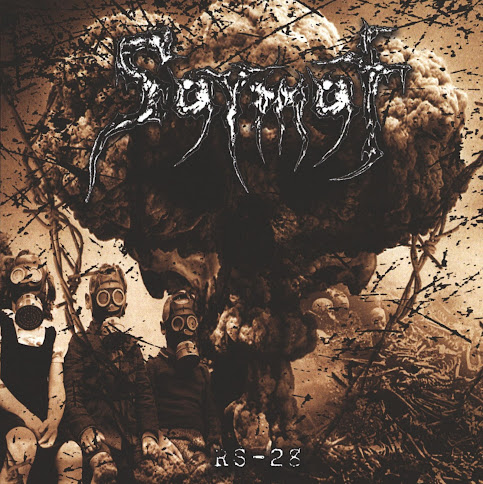
Sarmat - RS-28


Sarmat's RS-28 is modern Death Metal in the Polish lineage. The cold mechanical tonal vista found in Behemoth's Demigod era or Decapitated's Negation / Organic Hallucinosis is to be found in Sarmat's blend of blasts and zizzing guitars. Vocalist Łukasz Kobusiński agrees that if there were to be definable Polish Death Metal characteristics, I have mostly nailed them down. "During the promotion process of our RS-28 album I got a few opinions similar to yours. For me, as a guy born in Poland and living here for all my life till now it's hard to judge if the statement is true or not. I don't see too many specific characteristics in Polish death metal... Maybe the mechanical mood and industrial atmosphere are the Polish remarkable signs, but I wouldn't be able to categorize the band playing death metal this way as the one coming out of Poland only because of the fact." 

RS-28 demands active listening. Where much of Death Metal's landscape can be listened to from afar and receive reasonable clarity into what makes the genre tick, Sarmat is best enjoyed in lockstep with each pace forward of the album. It is, perhaps, problematic that RS-28 could at times become boring when relied on as background ear-fodder, but it also speaks to the detailed musical ideas present that it is not such an easily digested slab of extreme metal. Łukasz delved into the composition of the album for me. "The main composer was Daniel, who is also the composer of the new stuff for the second album. He created the music and did preliminary drum parts arrangements (set them in the computer program). He recorded the guitar parts, the bass guitar parts and VST instruments parts at his home. Then the session drummer (Krzysztof Klingbein, known for his work as a live musician for Vader and plenty of session recordings for many bands) recorded the drum parts at his rehearsal room, which is also his recording room. At this time the core of the album was established."

Regarding his approach to the vocals and the crisp professional production of RS-28. "I was asked to do this (record vocals - Orion) when compositions were finally recorded, so there was no chance to change anything – I had to do my job without any excuses and attempts to rearrange or re-record a single sound. My vocal style is rather death metal one than any 'other metal vocal style one', so at this part of creation we have reached the foundation of the Sarmat band style to the RS-28 album. We were pleased by the fact that Arkadiusz “Malta” Malczewski (known from his work as a live sound engineer for Behemoth and for his previous works as a studio sound engineer for that band) agreed to do this job for us. There were plenty of mixed versions and we were seeking the best one for some time. This third part allowed us to create the final version of the album we are writing about now."

Sarmat excels in the sharp usage of bright melodic highlights, an interesting lack of transitional filler, and in guitarists' Daniel Szymanowicz and Krzysztof Kopczeński's ability to consistently find discomforting and tense melodic movements. Drummer Krzysztof Klingbein is impressive throughout, offering endless blast-beats and double bass intensity for the shifting sands that are the guitarist's melodies. Łukasz offers a top-tier vocal performance. Deep bellowing growled vocals which are on the lower end but short of guttural. Malczewski's production on RS-28 complements these stylistic tendencies of the band and the choices Sarmat has made with respect to their instrument tone appears well thought. A grating hollow guitar tone allows melodies and notes that may otherwise be drowned out in a thicker tone cut through the rest of the mix while playing to the mechanized drumming. The overall effect is one of complete cohesion and purpose.

"Evilution" is the album's strongest track and epitomizes the usage of all these finely honed elements. A short tense intro erupts unexpectedly into the albums most memorable verse riff; down-tuned rubbery guitars underlie short bursts of higher-octave ringing cadence that leave tense phantom harmonies lingering throughout the track. Riffs simply turn into each other perfectly, like perfectly sized bolts into their corresponding nuts; no pauses, stops, gaps, shifts - just moments folding over into new moments. Łukasz's vocals are perfectly placed and play counter in many ways to the mechanical ceaseless drumming. They are the only natural rhythm present. Łukasz's has his own thoughts on the song and the role his vocals play. "Well, it wasn't my favorite track at the beginning. Neither it is now, but now I may say that it's a very good one for playing live. It gives a moment for taking a breath between much faster songs and it has a sinister atmosphere that is very eligible for live shows of a death/black metal band such as Sarmat. As for vocals arranged to this particular composition there is something unique in them. Despite it's rather a middle tempo song with strong, but monumental and not very aggressive vocals it includes the fastest vocal part on the album. I tried to emphasize the diversity of the riffs in the track by creating vocal parts different to each other in one track. I think I have achieved this effect.

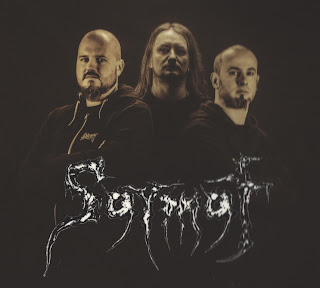
The greatest concern I have with Sarmat's overall presentation across RS-28 is the general simplicity of the songs. While it's true that there are loads of nuanced details and layers to explore, the general structure is often elementary. The lack of transitional segments throughout in addition to a consistent usage of no more than three or four main riffs in each song, even if the songs are short, may be a turn off for seasoned listeners who prefer a more complex linear composition or a narrative feel to their death metal. As a whole, however, this simplicity gives heightened impact and tension, as the listener waits for something to happen. There is an emotional bleakness to this lack of structural movement which is calming and unnerving at the same time. The album cover depicting children in gas masks echoes this bleakness and pessimism. The digipak physical release is nicely put together and is as professional as a digipak release can be assembled with a full booklet including lyrics and band photos. It is clear that the Sarmat trio of Daniel, Krzysztof, and Łukasz is serious about the project but Łukasz cites there is only one emotion that Sarmat is aiming at with their music. "Fear is the main emotion which I would like to be felt by every listener to the RS-28 album."

Friday, October 8, 2021

Trees Speak - PostHuman


Taking a step outside the Heavy Metal realms, Trees Speak is an Arizonian project which claims to align its tone with the 1970's Krautrock movement and groups such as Kraftwerk, Tangerine Dream, Cluster, etc. The duo does a good job capturing the textures of the scene however less organic synths and snappy electronic drums create the type of dichotomy which gives PostHuman a more modern coating and separates it from those seminal works of the early to mid 70's movement. This modern jacket aids Trees Speak achieve their aim of creating sci-fi futuristic music, however over the course of numerous listens, I can't help but find less and less to bring me back to a lot of the material. Whereas an album such as Autobahn proceeds with an almost classical sense of composition or Music for Airports idles with the architecture of intellectual reflection, it's difficult to find deeper 'external' inspiration in PostHuman's structures. Appearing on Soul Jazz Records, the gatefold vinyl presentation is beautifully done, with minimalist artwork and golden-age of sci-fi type text choices that fit the album perfectly.

A third of the songs are developed around individual rhythmic phrases where drums and bass work in tandem.  Another third are display lone instrumental motifs top-dressed with slick layering choices. More than half of the album relies on rudimentary compositional foundations. Tracks like opener "Double Slit", the five-spot "Elements of Matter", or "Healing Rods" appearing in the album's third quarter all fall into what become trap-points in the albums flow. Some songs are simply interesting enough to overwhelm this tendency towards repetitiveness, like the chromatic and panoramic "Magic Transistor" or the hard-hitting "Machine Vision" that tags along on the accompanying 7". "Scheinwelt" is another track which supersedes the rhythmic clause that the album abides by as it immerses the listener in a robotic sullenness, the depressed circuitry of hyperconnected post-human beings which we are surely streamlining head over heels towards becoming. 

And so "Scheinwelt" is one of the tracks which best represents Trees Speak's theme of approaching the soundscapes of futurism and post-human existence. The digitized vocal effects of "Quantize Humanize" are obvious and kitsch but, being as sparingly used on the album as they are, introduce voice as a textural element that has it's intended effect. I find the title track, "Post Human", the most subtle of efforts towards futurism, coming across as a somber ode to the artificial beauty of the unforeseeable eons ahead and so is particularly reflective. All of this effort however is overshadowed by the album's longest, most expansive, structurally complex, and visionary creation, "Amnesia Transmitter".  The spacey cinematic narration succeeds as a singular song, but carries the album's defining moment as the synthesizer melody reaches it's zenith just short of the four minute mark.

One of the other aspects of PostHuman which deserves mention and which almost slipped past my radar, even after at least twenty or thirty full listens to this record, was the melodic similarity to a lot of 70's and 80's Afro-jazz and golden age Ethiopian popular music. To what extent this influence is real is to be cited by Daniel and Damian Diaz, the project's masterminds, but I am convinced that the duo has listened to their fair share of Hailu Mergia and Teshome Wolde. The swings of cadence between songs, from uplifting to downtrodden, from Western-music sensible to Western-music offensive, may be a key to obtaining the 'post-human' sound they seek, as global exchange of music and art continues to break down niche pockets and movements. In much the same way that Hip-Hop has influenced and continues to influence popular music - even genres which are polar opposite in many ways such as Country music - it is only expected that in hundreds of years the distant influence of long-gone genres will somehow linger as figments in tiny corners of future art.

Ultimately, the question PostHuman poses is whether or not these tracks produce atmospheres which the listener believes represent what the future holds for mankind; whatever - and whenever - that future is. Obviously, this task is not as easy as attributing an atmosphere to something known, like is often the case in Black Metal as artists seek natural atmospheres of the frigid, the arboreal, or the defiant. Trees Speak do seem to achieve this on several tracks throughout the album, smartly offering a multitude of vistas. While half of PostHuman comes across to my ears as too close to modern euro-trance/electronic dance best suited to posh pool parties and urban cocktail hours, I am yet intrigued by the project's capability to achieve difficult cinematic quality set-piece moments. I'd like to see a higher-minded approach to the underlying compositions as accomplished in "Post Human" and especially "Amnesia Transmitter" across a full album. 


Saturday, August 21, 2021

Åskog - Varþnaþer


Solid Black Metal with an old school vibe, Åskog's debut full length, Varþnaþer, should be more than a blip on the black metal radar. In much the same way as Ordinul Negru's Faustian Nights really surprised me with it's strong songwriting Åskog have done much the same. In fact, the two projects, though thousands of miles apart, really are perfect examples of contemporary Black Metal which remains firmly rooted in Second Wave influences yet still feels fresh and vibrant. Åskog offer something a little more primal, primitive, and aggressive compared to the Romanians, though both utilize melody to an exceptional degree. The strength of the album is likely due to the long-time collaboration of it's creators Adam Chapman and Lars Hansson in their previous band Murdryk. Adam explained the genesis to me. "We wanted to do something new where we shared 100% of the band from the get-go and try slightly different styles of music. There are obviously similarities in the music between the two bands but Åskog has a stronger identity. Originally, the Åskog album would have been the third Murdryck album if we did not decide to start over. However, this album was written from scratch as Åskog and had no songs or music over from Murdryck."

Varþnaþer is a recognizable conglomeration; a song like "Vinter" sounds entirely unique compared to even the next track on the album, "Tid," which itself sounds unique from tracks like "Mane" or "Varg." Each song is built around memorable themes which helps delineate each morsel, while the shared textures of the tracks - thick bass-heavy riffs, powerful full bodied black metal vocals, a dash of experimentation here and there - accumulate into a recognizable entity. And so even though "Vinter", "Tid", and "Mane" are all unique, they are clearly a part of something larger.  According to Chapman. "'Vinter' is quite accomplished but started off with very simple riffs. I wanted to keep it simple to create a bleak atmosphere. It's got some weird textures in there but I like how it develops and the hooks that got added along the way. I particularly enjoy the second half and the abrupt ending! 'Tid' is something that started off as drum beat and hook on the guitar but really came alive once Lars put his vocals down and created the prechorus/chorus melodic layers with his vocals. Probably the simplest song but also one of the strongest. 'Måne' is a bit of a throwback to the early Murdryck material with very fast tremolo riffs and tempos." When all is said and done, everything conglomerates into a singular whole.

Thematically, the primitive elements are emphasized through content rooted in black-and-white explorations of 'good' and 'evil', set against natural vistas and imagery. While Hansson wrote all the lyrics for the album, Chapman was able to give some further background on the headspace the albums exists within. "I would say our ideas are more about subjective reality of what we describe as good and evil albeit from a perspective without human interference. Does nature "see" things in terms of good or evil or is it just the way things are? There is no moral conscience at work in nature." The content itself apparently came naturally as well. "We talked about what we should write about. I always said to Lars to write about what you know as he was struggling to come up with ideas. He knew nature so that's what he wrote about it. I think it worked, as he became inspired and wrote text as fast as I could write songs." The Swedish lyrics do not disrupt my enjoyment of the record, however I did have to copy them into a translation website to read them.

The short song titles, and naturalist element gives the album a sense of finality and matter-of-factness. In much the same way as Von was keen to use singular words to help impress a sense of minimalism and primitivism, Åskog use the same technique to focus on the elemental and singular themes of the album. "Vinter" should sound as cold and bleak as it actually does. "Tid" should invoke the gargantuan tolling of some clocktower bell that symbolizes mortality. "Eld" should sound like the lapping flames of a fire licking at dry timber. This ability to create images and a visualization of something specific is a key characteristic of upper echelon Black Metal. Great Death metal doesn't need to create images in the mind and doesn't need to have transcendent underpinnings to be effective, however the best Black Metal always has these attributes. Hopefully, Åskog gift us another album to follow Varþnaþer soon, but Adam is on the fence. "We might do a demo again; we might do an EP or we might do an album. Right now, I don't really know. Lars wants to get going but I am not motivated and kind of tired after working solidly for nearly a year on the demo and album. I am always fluctuating between quitting music for good and writing a new album."

Thursday, July 29, 2021

Skorbvstr - Hedensk


The second release from Skorbvstr, Hedensk, is perfectly in line with the high standard set by the one man project's debut, Sakte Fort Veldig Kraftig, released just nine months back. To my ears, Hedensk is somehow angrier and carries a heavier dosage of vitriol than it's prototype. While there was a heavy sense of discomfort and bleakness to last year's debut, Hedensk is simply one step further emotionally. It truly continues the progression of this project as well. If the singular aim of ...Kraftig was to channel the demons which overwhelmed us all during the early and mid-Covid era - the feelings of confinement, loneliness, and frustration - then Hedensk could be said to be the natural progression into the now lingering emotional and political repercussions of anger, confusion, and distrust. It just so happens that these tracks were recorded at practically the same time as the national political fiasco associated with President Trump's final days in office. I make no claims as to the politics of Skorbvstr's mastermind. None need to be made; this year's election was a powder-keg both figuratively and literally. Frustration was felt through the whole body politic. This has seeped into the art of that moment as well.

Musically, Skorbvstr has retained all the singular elements which made the first demo so effective. Songs still open with the reverberating siren's call of ebbing feedback. Singularity is still the foundational principle, with songs offering melodies built off singular root notes. The overall impression is that of a lo-fi recording, but Hedensk is not lo-fi production wise; there is a clarity somewhere between the highs and lows in the mix, but the rawness and roughness of it all, the ill-defined tonality of individual elements in favor of textural highlights gives it a mystique reserved for an elite cohort who understand Black Metal on a deeper plane. This is clear from the (in)tense - as N. Birk would pen - opening salvo "Seer" which allows momentary audible snare and cymbals to cut through the pitchy atonality. The metallic ringing guitar which punctuates and supplies a lot of the hooks is an arrow through the heart of the mix in the best ways possible and at the right moments.

One of the most interesting tracks is the awkward and bizarre melodic experimentation of "Arroganse Med Lite Liv." It might be the most uncomfortable harmonic combination of the year... or decade... maybe ever. A pounding harangue of monotonous auditory displeasure, an off-color spotlight on the listener exposing their shame, the abduction of security and safety that we crawl to when confronted with unwelcome troubles. It's these kinds of emotions which are often misrepresented but which Skorbvster capture with their noisy eloquence. Skorbvster has truly been something to appreciate for me as a Black Metal fan. It's not something which can be appreciated as an outsider or surface-dweller to my ears; a context of some strange sort is required to get to the bottom of the project. Imagine yourself as a child and your house has a dark basement. First, you muster the courage to go down the stairs, then to look behind the boxes and objects creeping over you. Eventually, shivering, you struggle your way to the back, farthest corner of what must surely feel like a demons cave. The noises from the furnace bellow at you like a thundering hell. And you find nothing but you understand your fear. Skorbvster requires that understanding, maybe, to appreciate. 

Monday, June 28, 2021

Ischemic - All Paths Lead Nowhere


Often during war, scientific and engineering breakthroughs come at a breakneck pace. Within only a few years during World War II, for example, scientists on both sides of the conflict moved from rudimentary theoretical concepts of atomics to the Americans producing a nuclear weapon and the Germans not far behind them - only stymied in their quest for their chosen moderator, heavy water, by Norwegian saboteurs under the command of Leif Tronstad. Ischemic must be under similar self-inflicted stress because in the three years between 2013's Frigid Descent and 2016's All Paths Lead Nowhere, a similar breakthrough has seemingly occurred. Ischemic sent me their recent albums, from All Paths Lead Nowhere to their recent eponymous full length but for context, I decided to start at Frigid Descent, an interesting and audacious yet merely formative release to my ears. I was not sure whether there could be a significant ascent in the albums to follow but All Paths Lead Nowhere has been in my stereo for several weeks now and I've enjoyed it each time. 

It's clear that Ischemic has moved on from their 'rudimentary theoretical concepts' to effective practical theory. Not only are the individual songs better defined as lone entities, the album has a more mature and thoughtful gait, even though the songs are all mid-paced. Also evident is a great overall confidence amongst the band, especially vocalist Isa, who is truly impressive across all the tracks. The playback through my tape offers a bottom-end loaded pounding affair that captures the gut of the listener, but the higher frequency scratchiness of the guitar renders the important melodic themes with clarity and atmosphere. Where Frigid Descent could be described as shooting at something which had already been accomplished by Evoken or especially Ataraxie to a high degree of precision, All Paths Lead Nowhere is closer to something Ischemic could call their own. This shift in style brings them closer to a band like Hivelords than doom death genre progenitors and masters. 


The improved flow of All Paths Lead Nowhere is a major key for the EP's success. Opening track, "Nowhere", has the intent of an introduction and sets the overall plaintive mood of the record with a slow clean twanging guitar melody before launching into the only slightly faster, but more aggressive  "Black Mass Metastasis." While Frigid Descent's first two tracks ran a marathon twenty-three minutes and demanded the listener carve out time in their day to partake, All Paths Lead Nowhere covers just a few minutes more than this as an entirety, proving to be a more sizeable portion. "Into Oceans Unknown" highlights Isa's vocal range with searing black metal inspired screeches during the tracks' faster moments, and deeper death metal growls during the slower pre-historic vibed transitional moments. "Barren" is the album's biggest surprise and my favorite track. It is the most emotive track on the album, coming across stoically as guitars weave beautiful leads behind the long drawn out chords which would be at home on masterpieces like Morgion's Solinari or Disembowelment's Transcendence into The Peripheral. When Isa enters with her massive vocals along with drummer Chris and the huge low end of Anthony's bass, rare power is unleashed. "Barren", though, is truly just a lead in to the EP's final eponymous track, but is more than the following ten minute long album closer in it's two minute run-time. The albums longest track is placed ideally as the final song, resolving the album's pacing nicely with an tense fatalism similar to "Black Mass Metastasis." 

Ischemic have taken a great leap forward with All Paths Lead Nowhere and it is evident throughout each track. The overall impression is that All Paths Lead Nowhere is the progeny of a band who, during the creation and recording, were open to the rare energy that manifests in dank sweaty rehearsal caves amongst an inspired group of briefly connected intellects. Decisions about letting notes ring, letting the floor tom be the percussive glue across numerous tracks, the powerful two-voice approach of Isa, and the smooth movement from start to finish sound natural and intrinsic. Breakthroughs in every component elevate All Paths Lead Nowhere and leave me salivating instead of sickened to move into Ischemic's full length albums.
 

Tuesday, June 22, 2021

Contaminated Tones 2022

Recently announced via the Contaminated Tones Newsletter, I will be offering a physical version of Contaminated Tones. 

This physical installment will include copies of the full interviews conducted for Contaminated Tones, cut and paste layout of all reviews for this year as well as select review of previous years, as well as other articles. Also included will be an annual best-of compilation tape with hand picked tracks, interview snippets, live recordings from the past fifteen years of show-going, and miscellaneous sounds and screams. This is another step in pressing forward with my goal of pushing back against digitization of media and art, keeping the underground tradition of physical interaction alive, and allowing the open-minded unfettered flow of ideas to reach those who want to hear them. I will distribute flyers, advertisements, and demo material within this package when available as well and all are welcome to contact me if interested in having promotional materials mailed. Anyone interested in submitting interview material, written letters, articles, rants, conspiracy theories, recommendations, etc, can reach out to me directly. 

CTP VOL 1: RELEASE CONTENTS:

INTERVIEWS:
- Askog (2021)
- Feretro (2021)
- Ireful (2022)
- Ischemic (2022)
- Sarmat (2022)
- Skorbvster (2021)

ARTICLES / REPRINTS:
- Morbid Faith Underground Newsletter #9
- Reprint of CTP #1 From 2008
- Thoughts on all New Jersey Releases of 2021 and 2022

MISCELLANEOUS:
- All Contaminated tones Reviews from 2021 and 2022

Saturday, June 5, 2021

Radiation - The Gift of Doom


Four years after their Plutonium Overdose 7" EP, a solid German Thrash influenced attack, Slovakians Radiation offer their full length, The Gift Of Doom, under similar command, though with a greater proficiency and accuracy. In fact, the two releases give credence to the perspective that a band can offer stylistically the same material with no recognizable overall change and yet put out a substantially stronger release. Radiation didn't need to change in any way from the EP with "Sword of Damocles" still holding a revered spot on my best of playlist, but where Plutonium Overdose offered one truly stand out song, The Gift of Doom offers several noteworthy tracks to build a more solid repertoire overall. It's this type of expanding repertoire which is key to maintain consistent fan interest and yet, paradoxically, for long-running projects with storied careers, is seemingly an impossible feat to achieve. Naturally, the artists and their die-hard fans will immediately love new material, but for less zealous listeners, it becomes increasingly difficult to find worthy new additions to storied careers. 

Obviously Radiation are not Sodom, or Slayer, or Kreator. As such, Radiation does not have a laundry list of classic tracks by which new material continuously fails to live up to. The Gift of Doom does definitively add several cuts which I would consider necessary in Radiation's setlist, a setlist which I would pick over seeing washed up out-of-touch old thrash bands go through the motions. Radiation excel when guitarists Mraz and Riso discover memorable tails to their riffs, and repurpose those motifs throughout their tracks. "Praise The God of Nuclear Fusion" is one such example with a memorable opening riff that introduces a descending frill that is reintroduced throughout the song. "Eternal Toxic Fields" showcases this usage of strong reusable guitar licks as well, introducing a lower register element that is picked up again in the first half of solo and then repeating again.  "Thrash The Bastards" does the same though replaces the guitar motifs with staccato pounding on the floor tom to give a savage barbarism to the album's tertiary cut. It's through these morsels that Radiation offer burn songs into the listener's psyche. 

The Gift of Doom is likely one of the better underground thrash releases I've heard these past few years. Even though a surface reading of the lyrics might appear petulant due to the rough usage of the English language, the actual content offers some variety with songs like "Yperite" focusing on effects of the usage of mustard gas during World War I, and "Eternal Toxic Fields'" opening lyrics of "Poisons, drugs, smog and scums. We are consuming it every day. Municipal waste, garbage and scrap, but for good health we pray," pointing out the hypocrisy of personal health in a polluted world. It's all very dystopian. It's all very thrash at it's core. The rhythm production is genuine and natural; buzzsaw guitars, a tight clunky audible bass from Vrana, and a strong performance from drummer Janci who is full of energy and fire, though does not always find the most creative patterns. Along with guitars, Mroz handles vocals as well. His are quite harsh and raspy. I liken them to Van Drunen's vocals on Consuming Impulse.

This is still underground Teutonic influenced Thrash at its foundation and that will be a major consideration when deciding to give listening time to the record. Radiation is not going to make a person who gravitates away from the grittier German thrash into a fan. There are better historical releases for this, however, Radiation - and similar quality underground bands - will inevitably fill the boots of their forefathers as the aging 80's old guard moves on. Radiation offer a reverent type of banner then, which is evident in albums such as The Gift of Doom. It is their ilk who will still be marching onto stage one or two decades from now and inserting "Outbreak of Evil" or "Ausgebombt" into their setlist when Angel Ripper needs a walker and cane to get to and fro following fifty years of headbanging. Someone will be there to perform underground thrash equivalents to Rock and Roll standards, and having worthwhile original material to go along with the Old Hymns. I love the blinding highlighter yellow tapes with this packaging as well.